
The 3D printed Invisalign Palatal Expander: A Parent's Guide to an alternative solution for orthodontic treatment for young kids
treatment
By
Dr. Rooz Khosravi, ABO & EBAO Board-Certified Orthodontist
When a child needs palatal expansion, families now have another new option to consider: the Invisalign Palatal Expander. This approach uses a series of custom-made, removable expanders that gradually widen the upper jaw as your child grows. Because the expanders can be removed, they can make everyday routines like eating and brushing easier while offering a different experience from a traditional fixed expander.
If your child’s pediatric dentist or orthodontist has mentioned a palate expander, now you have a few choices. The two main classes of expanders in kids have been the one that is glued on the teeth and the one that can be removed. 3D printed technology has changed both of these choices for the better.

At 425, we offer a removable 3D printed Invisalign expander which is an excellent solution for the right patient.
Here is what parents need to know about how it works, what makes it different, and what treatment actually looks like at 425 Clear Aligners.
Why kids need palatal expansion in the first place
Before we get into the appliance itself, it helps to understand what an expander actually does and why your provider might recommend one.
A palatal expander widens the upper jaw. It is used in growing children, typically between the ages of 6 and 11, when the roof of the mouth (the palate) is still developing and can be gently guided into a wider shape.
Kids who benefit from expansion often have one or more of the following:
A narrow upper jaw
Crowding, with not enough room for adult teeth to come in
A crossbite, where upper teeth sit inside lower teeth on one or both sides
Signs of mouth breathing or sleep-disordered breathing (lots of controversies here)
Catching these things early (what orthodontists call Phase 1) is a big deal. It can create the space adult teeth need to come in properly, help avoid extractions or complicated orthodontic treatment down the line, and support a smooth dental transition from baby teeth to adult teeth and jaw development while your child is still growing.
The American Association of Orthodontists recommends that every child have their first orthodontic evaluation by age 7 for exactly this reason. We see patients as young as 5 yrs old and work with local pediatric dentists.
The traditional metal expander
For decades, the standard palatal expander looked and worked the same way. A metal frame with bands which is cemented to the back molars, with a small screw in the middle of the palate. A parent inserts a tiny key into that screw and gives it a quarter turn, which very slightly widens the appliance and applies pressure to the palate. The number of the turns per week varies based on the age of the patient.
It works, and orthodontists have used it successfully for a long time. 3D printed version of these expander made this so much easier especially for the families who would like to set it and forget it.
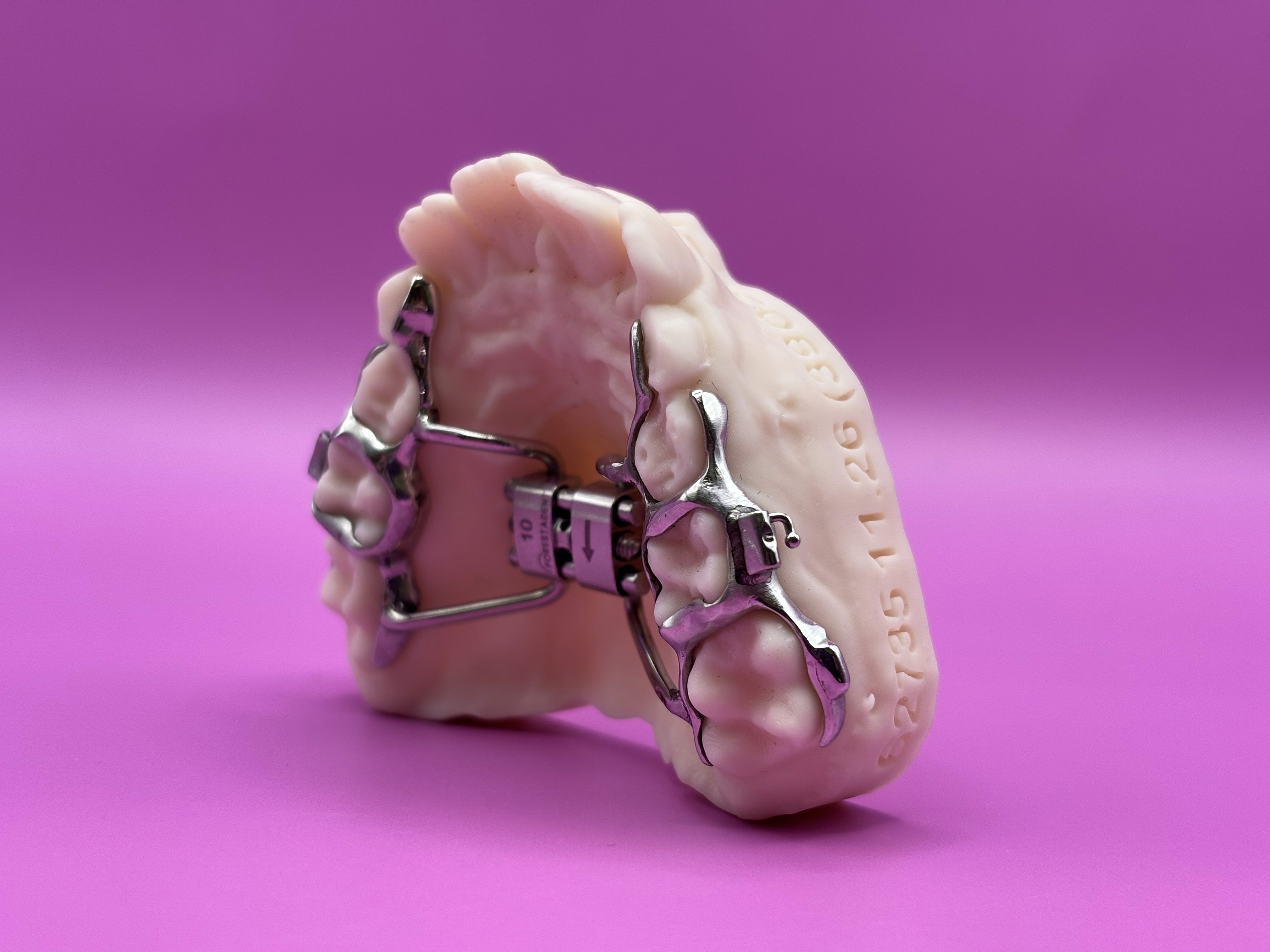
Here are the things you need to know which could be challenging with fixed expanders: :
It stays glued in the mouth for the entire treatment. This means you can’t take it off.
Kids and parents should clean this really well and it could be challenging.
Food gets stuck under it on a regular basis
Most parents who have been through it describe the process the same way: it worked, but it needs attention.
Here is an alternative: the 3D printed Invisalign Palatal Expander
The Invisalign Palatal Expander System takes a completely different approach. Instead of one metal appliance with a screw, your child gets a series of custom 3D-printed expanders, each one slightly wider than the last. Each stage is designed to move the palate about 0.25 millimeters, and your child progresses through the series as prescribed by your orthodontist.
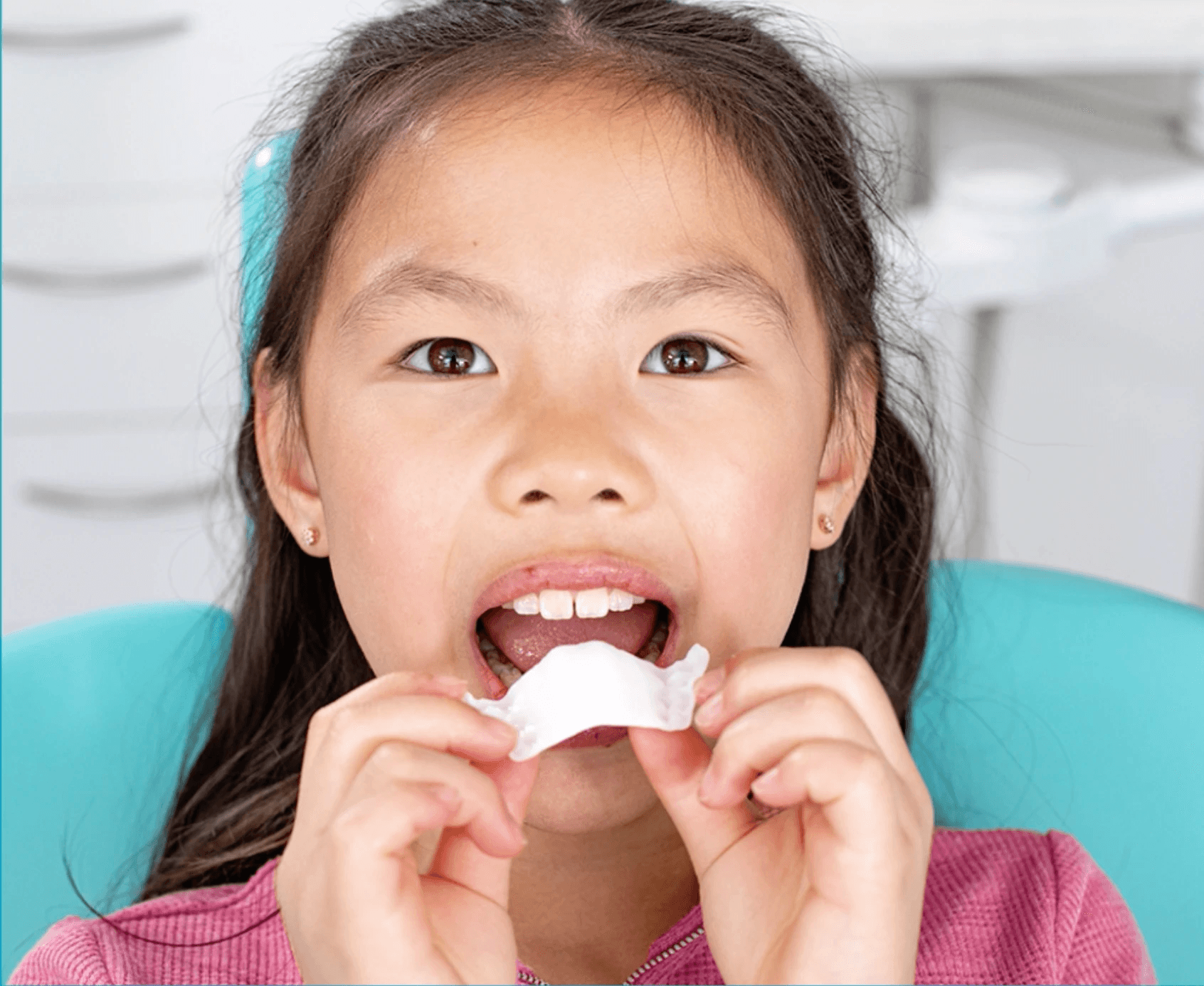
The device is made from a smooth, medical-grade polymer (polyamide-12), custom-fit to your child's mouth from a digital iTero scan. Small tooth-colored attachments are bonded to a few of your child's back teeth to hold the expander securely in place, but the device itself is removable.
That single change reshapes what treatment feels like day to day.
What makes the Invisalign Palatal Expander different
Here is where the comparison really matters for families.
No screws to turn. The nightly key-turn ritual is gone. Your child simply switches to the next expander in the series on the schedule your orthodontist sets.
Removable for cleaning. Your child pops the expander out, brushes and flosses normally, then puts it back in. Oral hygiene stays as good as it always was.
No metal or wires. Nothing to poke a tongue or cut a cheek. No broken parts that require an emergency visit.
Custom-fit and comfortable. Every expander is 3D-printed to the exact shape of your child's mouth. The palate coverage and thickness are customized for a smooth, comfortable fit.
In other words, you are trading some challenges with fixed expander to new requirements. 3D printing technology truly changed the removable expander appliance but you have to wear it regularly. This is the same with orthodontic tooth movement with wire or now with plastic - a fantastic solution for the right patient.
What treatment looks like, step by step
Every case is unique, but here is what a typical course of treatment looks like with the Invisalign Palatal Expander at 425 Clear Aligners.
Step 1: Consultation and digital scan
You start with a virtual consultation with Dr. Rooz Khosravi. He will review your child’s growth patterns, and confirm whether expansion is the right treatment. If it is, a quick digital scan captures the exact shape of your child's palate and teeth. No goopy impressions.
Step 2: Custom expanders are made
Your child's expanders are designed from the scan and 3D-printed to their exact anatomy. A full series is manufactured for the treatment plan.
Step 3: Delivery and attachment bonding
At the delivery appointment, small tooth-colored attachments are bonded to a few of your child's back teeth. These help hold the expander securely in place. Your child learns how to insert and remove the appliance, and you take home the series.
Step 4: Active expansion phase
Your child wears the expander 22 hours a day, removing it only for brushing, flossing, and cleaning the appliance. Each new stage in the series widens the palate slightly.
Step 5: Holding phase
Once the palate has reached its target width, your child transitions to a series of holders. These look and fit like the expander but do not apply additional pressure. Their job is to hold the palate in its new position while the bone stabilizes. Holders are replaced every two to four weeks.
Step 6: Routine check-ins
Throughout treatment, your child comes in for periodic check-ins so Dr. Rooz can confirm progress and make any adjustments.

The bigger picture: early treatment matters
Palatal expansion at the right age is one of the highest-value orthodontic interventions available. Correcting a narrow palate while your child is still growing can:
Create room for adult teeth to come in without extractions
Correct crossbites early
Support healthy nasal breathing and better sleep
Set up a much simpler Phase 2 orthodontic treatment later (if any is needed at all)
The window for this kind of expansion is limited. Once the palate finishes fusing (usually in the mid teens), expansion becomes much harder and often requires surgery. That is why the AAO recommends an evaluation by age 7. Even if no treatment is needed yet, you get a professional read on your child's development and a plan for what to watch.
Who is a great candidate for Invisalign 3D printed expander at 425 Clear aligners orthodontics?
The Invisalign Palatal Expander can be a great fit for growing kids who need palatal expansion and families who want a more flexible approach to treatment.
It may be a good option if your family is looking for:
A removable expander that makes brushing and cleaning easier
No daily key turning: just switch to the next expander as directed
Fewer trips to the orthodontist, with virtual check-ins from home
A treatment experience that fits busy family schedules
A 3D-printed, custom-fit appliance designed specifically for your child
Frequently asked questions
At what age can my child start Invisalign Palatal Expander treatment?
The Invisalign Palatal Expander is designed for growing children, typically ages 6 to 11. The right timing depends on your child's specific dentition and jaw development. Dr. Rooz will let you know if your child is a candidate at their consultation.
Is it painful?
Most kids describe a feeling of pressure in the first day or two after switching to a new stage, similar to the tightness kids feel with braces or aligners. It fades quickly. There are no sharp metal parts, no poking wires, and no daily screw-turning.
Does insurance cover it?
Many dental and orthodontic insurance plans cover Phase 1 orthodontic treatment, which includes palatal expansion.
How is this different from Invisalign clear aligners?
Clear aligners move individual teeth into a straighter position. The Invisalign Palatal Expander widens the upper jaw itself. They are different treatments for different problems, though the two can be used together as part of a full Phase 1 plan with Invisalign First aligners.
What if my child does not tolerate it well?
Because the appliance is removable, adjustments are much easier than with a fixed metal expander. If your child is struggling, we can work with you to find solutions. In our experience, most kids adapt within a week and quickly forget the expander is even there.
Is it as effective as a metal expander?
Yes. The Invisalign Palatal Expander is FDA-cleared and clinically proven to achieve skeletal expansion just as effectively as traditional metal expanders. The clinical outcome is the same. The experience for your family is very different.
A modern option for a proven treatment
Palatal expansion is one of the most valuable orthodontic treatments you can do for a growing child. The Invisalign Palatal Expander does not change what the treatment accomplishes. It changes what it takes to get there: no metal, no daily key-turning, no hygiene compromises, no broken wires, and a much smoother experience for kids and parents alike.
If your child has been recommended for a palatal expander, or you have noticed signs like crowding, a narrow smile, mouth breathing, or a crossbite, the best next step is an evaluation.
Book a consultation with Dr. Rooz Khosravi at 425 Clear Aligners. You will get a clear read on whether your child is a candidate for the Invisalign Palatal Expander, what the treatment would involve, and what to expect at every step.